
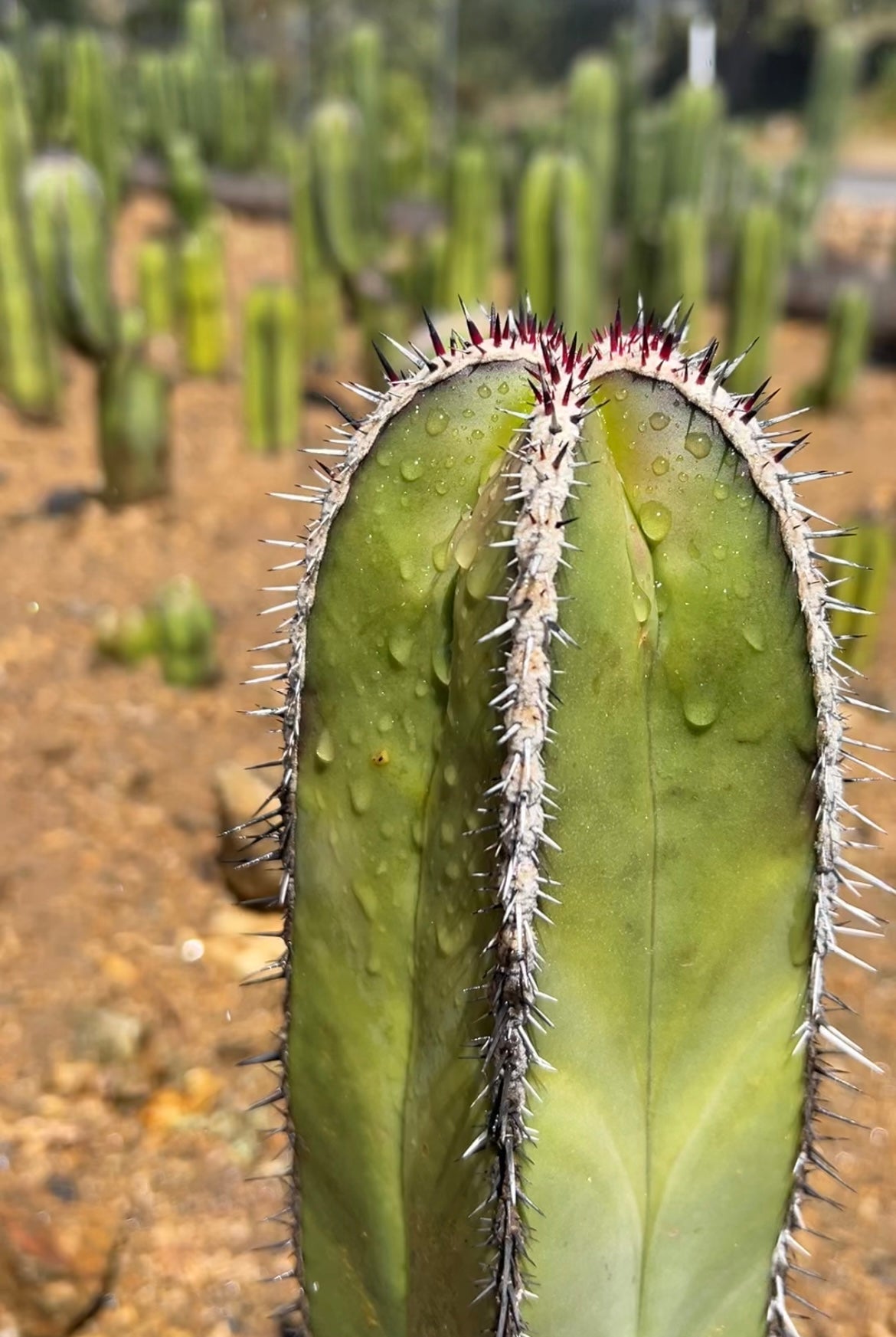
We get more questions about watering than anything else at the nursery, so this guide goes past the basics. If you have not read our core method yet, start there first: How Often to Water a Cactus: The Soak and Dry Method. This guide picks up where that one leaves off, on reading your plant's warning signs and adjusting through the year.

The one rule, quickly
We are strict about this because it matters: never water on a schedule. Water only when the soil has gone completely dry, then soak it deeply and leave it alone until it dries out again. That is the whole method, and it is covered in full detail, with the finger test and the soak-and-dry steps, in our main watering guide. What follows here is how to tell whether you are actually getting it right, and how that changes across the year.
Signs you are overwatering
This is the mistake that kills the most cacti we see, by a wide margin. Watch for:
- Soft or mushy spots, especially near the base of the plant.
- A yellow, translucent, or waterlogged look to the skin.
- A plant that leans or topples, often a sign the base has already started to rot.
- Black or brown mush at soil level, or a sour smell from the pot.
- Fungus gnats hovering around the soil, a sign it is staying wet too long.
Signs you are underwatering
Underwatering looks alarming but is almost always fixable:
- Wrinkling or puckering of the skin, most visible on the sides of a barrel or column.
- A shrunken or deflated look compared to how the plant looked when it arrived.
- Slight softness that firms back up within a day or two of a proper soak.
A thirsty cactus that gets a deep soak plumps back up fast. That is the whole reason we push people toward soak and dry instead of a fixed calendar: a slightly underwatered plant recovers, an overwatered one usually does not.
Overwatered: what to do
- Stop watering immediately
- Move to brighter, airier spot
- Check for rot and trim if needed
- Repot into dry, fast-draining mix
Underwatered: what to do
- Confirm soil is fully dry first
- Give one deep soak, drain fully
- Resume soak and dry as normal
- Expect recovery within days
Watering changes with the seasons, here is how
The soak-and-dry rule never changes. What changes is how long a pot takes to dry out, and that is driven entirely by the season.
Spring and summer, active growth
Your cactus is putting on new growth and pulling water faster. Longer days, more heat, and more light all speed up how quickly soil dries, so soaks tend to come more often, often every couple of weeks for a potted plant in a bright spot. Check the soil rather than counting days.
Fall and winter, dormancy
Most desert cacti slow down or stop growing entirely once temperatures and daylight drop. The plant is barely using water, and soil that stayed damp for two weeks in July can stay damp for six weeks in December. Watering on the old summer schedule during this stretch is one of the most common ways we see people accidentally rot a plant that survived all summer just fine. For a full breakdown of cold-season care, see our Winter Cactus Care Guide.
Other things that change how fast soil dries
- Pot material: terracotta wicks moisture out faster than plastic or glazed ceramic.
- Indoors vs. outdoors: indoor plants in low airflow dry out much slower than the same plant outside.
- Recently repotted or bare root plants: hold off watering for several days to let any cut ends callus, then start soak and dry as normal. Our bare root and cutting care guide covers this in detail.
- Plant size: small pots dry out faster than large ones, since there is less soil volume to hold moisture.
The quick version
- Mushy, discolored, or toppling means overwatered. Stop watering and check for rot.
- Wrinkled or shrunken means underwatered. One deep soak usually fixes it.
- Water more often in spring and summer, much less in fall and winter.
- Always check the soil, never the calendar. Full method: How Often to Water a Cactus.