
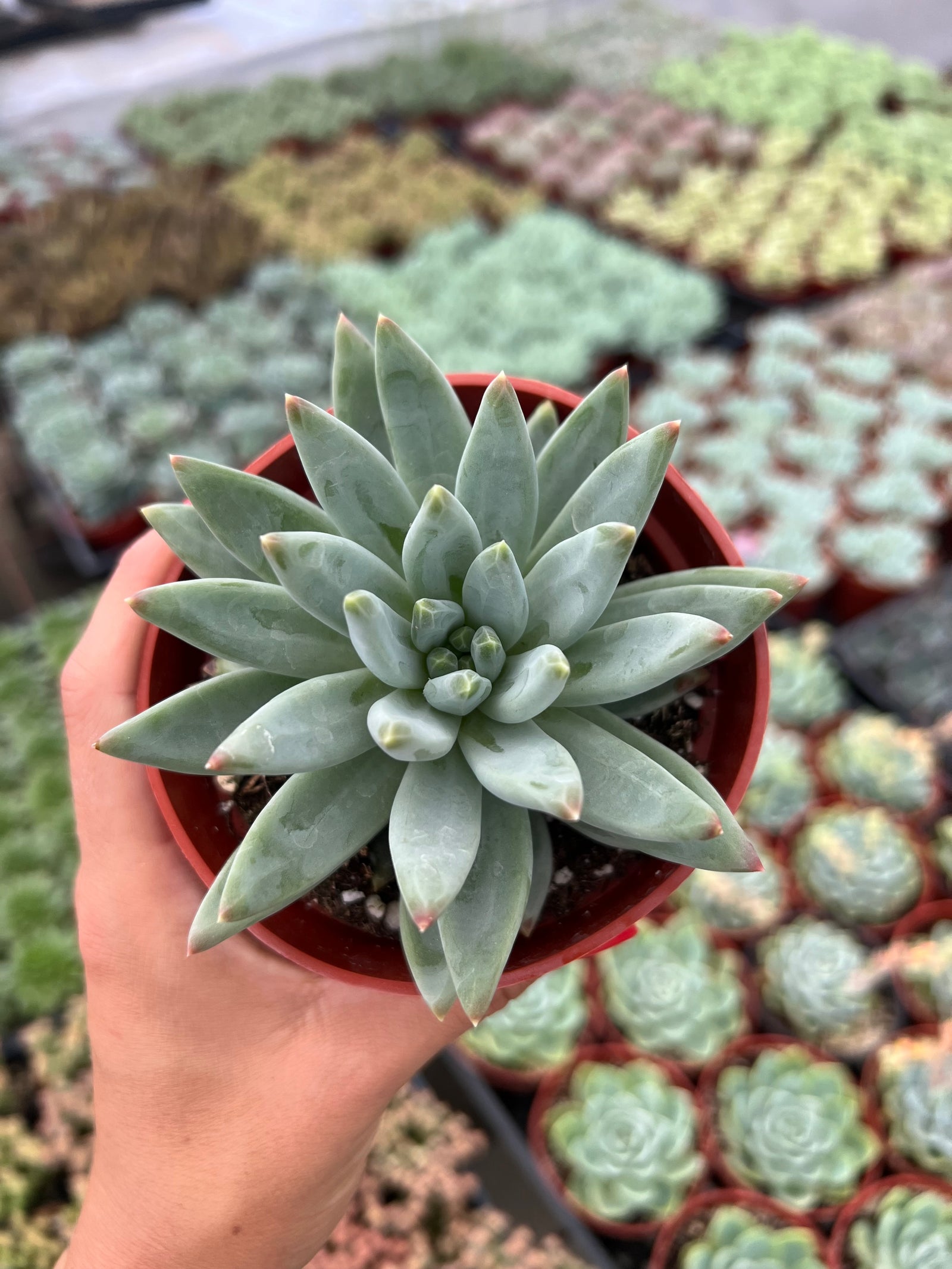
Succulents have a reputation for being easy, and they are, once you learn the one habit that matters most: leave them alone until they're thirsty. Here's how we grow ours at the nursery, and how to keep yours happy at home.

Quick start: care at a glance
- Light: 4 to 6 hours of bright light a day. Most types want direct sun outdoors; some prefer bright indirect light indoors.
- Water: Soak and dry. Water deeply, then wait until the soil is bone dry before watering again.
- Soil: A well-draining cactus or succulent mix, or regular potting soil cut with sand or perlite.
- Pot: A drainage hole is a must. No hole means the pot is decorative only.
- Temperature: Comfortable between 60 and 80°F. Fine with dry air, not fine with freezing.
- Fertilizer: A light feeding in spring and summer, none in winter.
How much light do succulents need?
Most succulents want 4 to 6 hours of bright light a day. Many outdoor types are happiest in direct sun once they're acclimated; most indoor succulents do best in bright indirect light, like a spot a few feet back from a south or west window. If a plant starts stretching or leaning toward the light, that's its way of telling you it needs more.
How often should you water succulents?
Think of succulents as desert plants: they store water in their leaves and would rather go dry than sit wet. Let the soil dry out completely, then water it deeply until it runs out the bottom of the pot. Then leave it alone.
Don't water on a fixed schedule. How fast the soil dries depends on your pot, your climate, and the season, so check the soil itself rather than the calendar. In warm months this often works out to roughly once a week or two; in winter, when growth slows, it can stretch to a month or more between waterings. When you're not sure, wait a few more days. A succulent that's a bit thirsty recovers fast. One left sitting in wet soil can rot at the roots before you notice anything is wrong.
What soil and pot do succulents need?
Succulents don't want soggy roots, so well-draining soil matters more than almost anything else. A cactus or succulent mix works well, or you can cut regular potting soil with sand or perlite yourself.
Do succulents need fertilizer?
During the growing season, spring and summer, a balanced, water-soluble fertilizer at half strength once a month gives them a boost. In winter, skip it. They're resting, not growing, and feeding them then does more harm than good.
What temperature do succulents like?
Most succulents are comfortable between 60 and 80°F. They handle dry air without complaint, but freezing temperatures are a real threat. If a cold night is coming and your succulents are in the ground or can't come inside, cover them or move potted ones under shelter.
Common pests and problems
- Mealybugs and aphids: check regularly, especially where leaves overlap. Dab visible pests with a cotton swab dipped in isopropyl alcohol, or use a gentle insecticidal soap or neem oil for a bigger outbreak.
- Stretching (etiolation): a sign of too little light. Move the plant somewhere brighter.
- Mushy or discolored leaves: almost always overwatering. Let the soil dry out fully and hold off before watering again.
- Shriveled leaves: the plant is thirsty. Give it a deep soak.
Are you over or underwatering?
Signs of overwatering
- Leaves turn soft, mushy, or translucent.
- Lower leaves yellow and drop easily.
- Soil stays damp days after watering.
Signs of underwatering
- Leaves look shriveled or wrinkled.
- Leaves feel thin and lightweight.
- Plant perks back up within a day of a deep soak.

Beginner-friendly succulents to start with
If you're picking your first succulent, the zebra plant and the bear's paw are both forgiving and stay small on a windowsill. Both follow the same soak-and-dry rule as everything else in this guide.
FAQ
Can succulents live indoors year round?
Yes, as long as they get enough light. A bright windowsill works for many types; if leaves start stretching, add a grow light or move it closer to the glass.
Why is my succulent losing leaves?
A few lower leaves dropping naturally is normal as the plant grows. Leaves that are soft or mushy point to overwatering; leaves that are dry and shriveled point to underwatering.
Do succulents need direct sun?
Many outdoor varieties do best in direct sun once acclimated. Most indoor succulents prefer bright, indirect light instead, since window glass and lower overall light indoors make direct sun less forgiving.
The quick version
- Bright light, 4 to 6 hours a day, direct for outdoor types, indirect for most indoor ones.
- Water only when the soil is completely dry, never on a schedule.
- Fast-draining soil and a pot with a drainage hole.
- Light feeding in spring and summer, none in winter.
- When in doubt, wait to water.
Orders $99 and up ship free, and every succulent leaves our nursery in Fallbrook, California with a care card.