
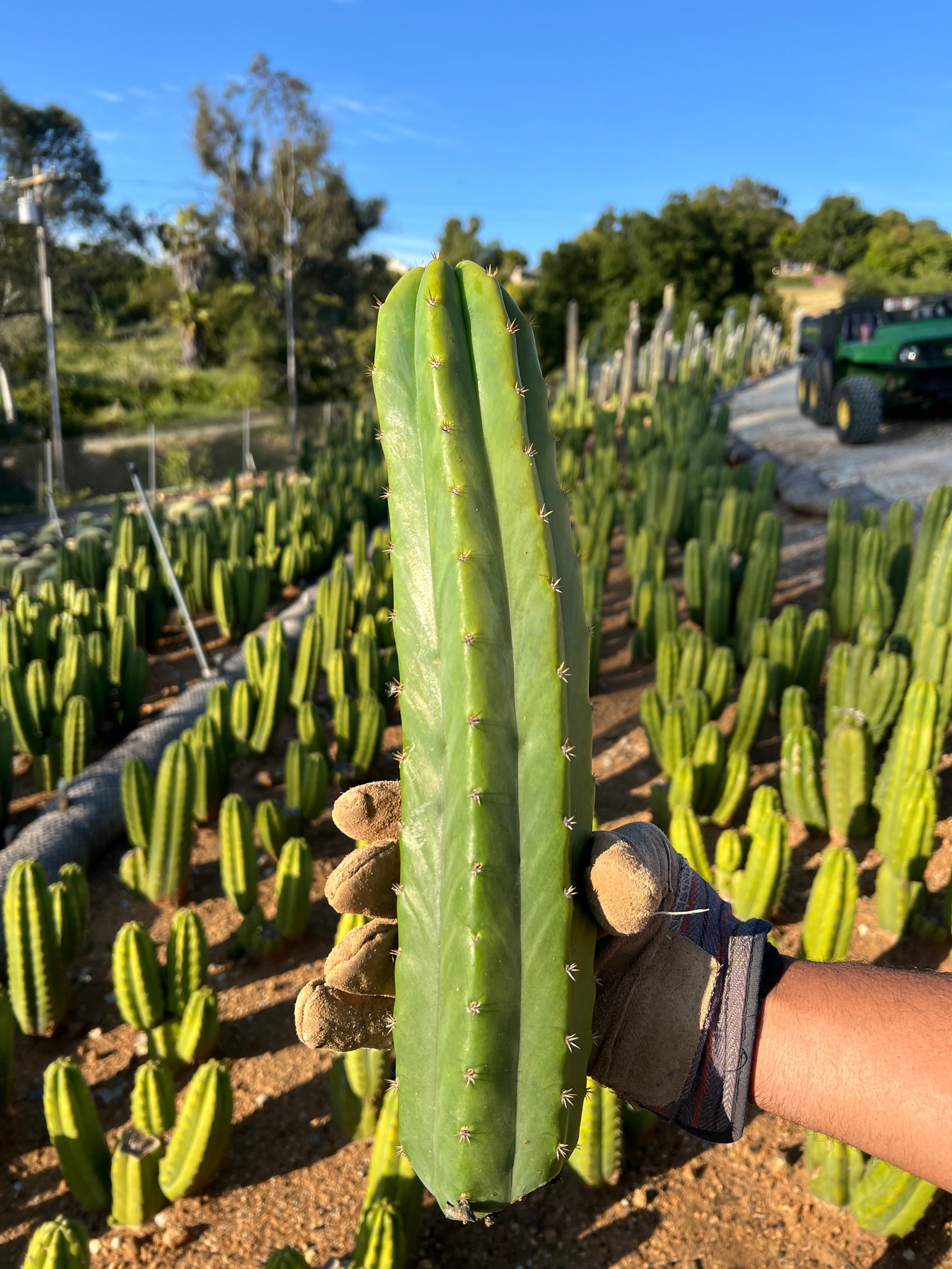
We hear from a lot of you asking for more detail on this, so here is the full walkthrough we give customers at the nursery, start to finish.

Why does the cut end need to dry out first?
When you first unwrap your cutting, you will see a clean cut on one end. That is normal. Cacti propagate readily from cuttings, but the fresh wound needs to seal before it touches soil. Set the cutting in a dry, shaded spot for 2-3 weeks. You will know it is ready when the cut end feels hard and dry all the way across, not tacky or soft anywhere. Planting before that point is the single most common way a cutting rots instead of roots.
Potting a calloused cutting
- Mix the soil: equal parts potting soil, coarse sand, and perlite or pumice. Cacti need fast drainage, full stop.
- Set the depth: plant the cutting 1-2 inches deep. Tall cuttings may need a small stake to stay upright while roots form.
- Leave it alone: do not water right away. Let the cutting settle into the soil for about a week before its first drink.
How often should you water a new cutting?
Water only when the soil is completely dry, not on any set day of the week. This is called soak and dry: when the mix is bone dry, water it thoroughly, then leave it alone until it is bone dry again. Once roots are established, this often works out to every few weeks, but let the soil tell you, not the calendar. Give your cutting bright, indirect light while it is rooting, a sunny windowsill or a spot with filtered sun works well.
How do you know roots are forming?
Patience is the name of the game. It can take several weeks to a few months for roots to develop. New growth at the top of the cutting is a good sign roots are taking hold underground. You can also give it a gentle, careful tug after a few weeks. If you feel resistance, roots have started to grip the soil.
When do you move it to a bigger pot?
Once your cutting has rooted, transplant it into a pot just slightly larger than the root ball, using fresh, well-draining soil. Water sparingly right after transplanting, then go back to soak and dry as the roots settle into their new home. From here on, ongoing care is the same as any established cactus: full sun, fast-draining soil, and water only when the soil is completely dry.
The quick version
- Let the cut end callus 2-3 weeks before potting, until it is hard and dry.
- Pot in fast-draining mix: potting soil, coarse sand, perlite or pumice.
- Wait about a week before the first watering, then follow soak and dry from there on.
- Bright, indirect light while rooting. Roots can take a few weeks to a few months.
- Overwatering, not underwatering, is what kills a new cutting.
Curious how cuttings compare to a fully rooted plant, or want to dig deeper into watering once your cactus is established? See our guides on how often to water a cactus and cuttings vs. rooted cacti.