
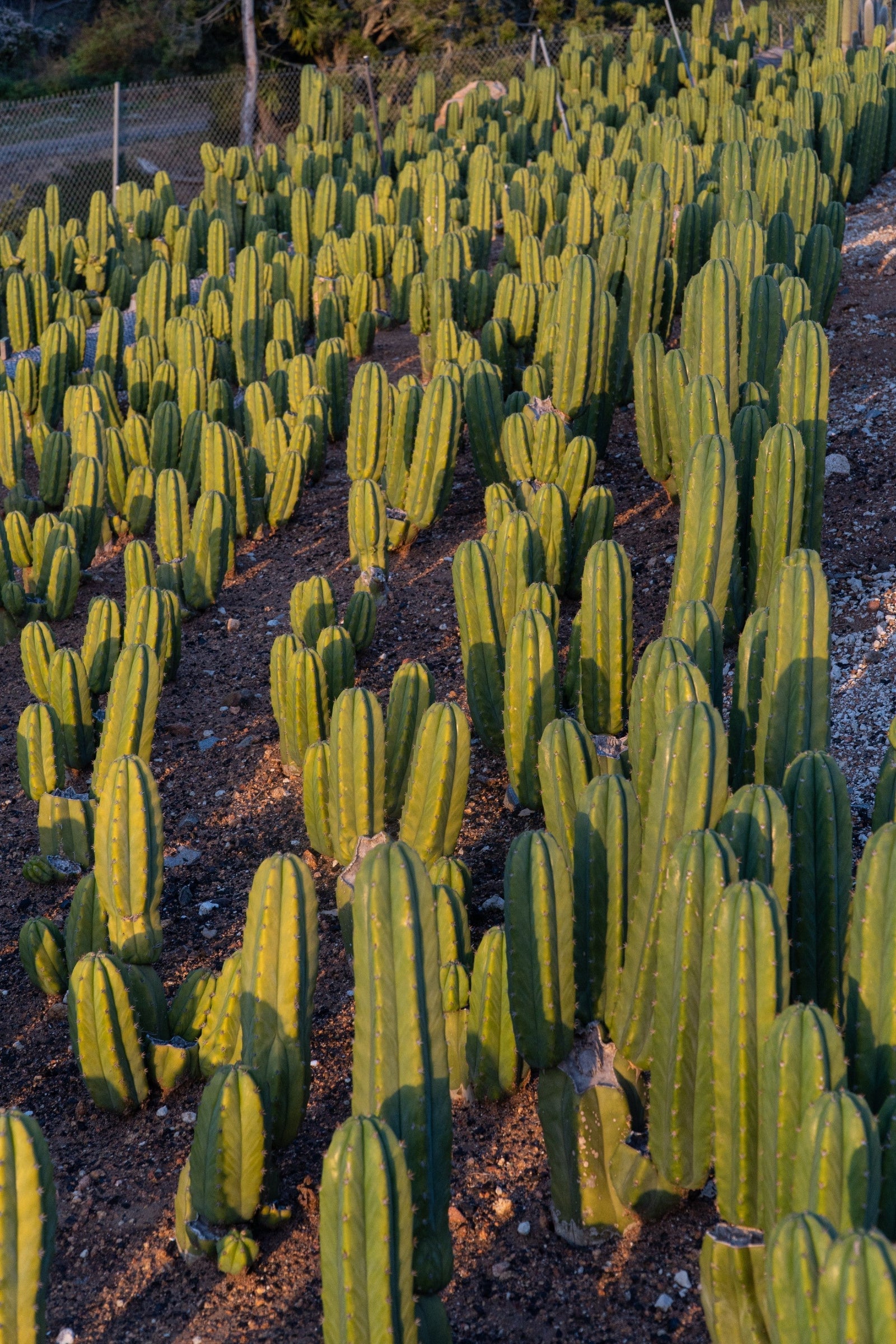
We grow ours here at Cactus Warehouse, a family-owned nursery, and it's one of the plants customers ask us the most about. Here's what's fact, what's history, and what to know if you want to grow one yourself.
Where does the San Pedro cactus come from?
The San Pedro cactus, scientifically known as Echinopsis pachanoi, has a history stretching back thousands of years, deeply intertwined with the indigenous cultures of the Andes Mountains.
Quick facts
- Native range: Peru, Ecuador, Colombia, Bolivia, Argentina, and Chile.
- Altitude: found at elevations of 6,600 to 9,800 feet.
- Cultural use: used for over 3,000 years in traditional medicine and divination, with depictions in Chavín temple artwork dating back to 1,300 BC. Still used today in Andean healing and shamanic rituals.
The name "San Pedro" translates to "Saint Peter." It's believed Spanish colonizers gave it the name, drawing a parallel between the cactus's traditional use and the keys to heaven held by St. Peter, a name that bridges indigenous tradition and colonial history.
How big does it get, and what does it look like?
The San Pedro is a columnar cactus, meaning it grows tall and upright like a pillar. Given the right conditions, it's a fast grower, adding several feet in a single year, especially when young.
- Height: can reach 20 feet or more. Think skyscrapers of the succulent world.
- Color: ranges from a light, almost bluish-green to a darker, more intense green, sometimes with a powdery whitish coating called a glaucous bloom that acts like sunscreen against intense sunlight.
- Structure: prominent vertical ribs, usually 4 to 8, running the length of the cactus. Younger plants tend to have fewer ribs and grow more as they mature, similar to counting the rings of a tree.
- Spines: relatively small and short compared to other cacti, typically yellowish-brown and growing in clusters along the ribs. Not as intimidating as some cactus spines, but still handle with care.
How to grow a San Pedro cactus
San Pedro cacti are relatively easy to care for, even for novice gardeners, if you can get their basic needs right.

Ideal growing conditions
- USDA Hardiness Zones: 8b through 10. Warm climates are best, and it can take brief cold down to 15°F (-9.4°C), but protect it from frost.
- Soil: well-draining is essential. A cactus-specific potting mix works well and keeps roots from sitting in water, which leads to rot.
- Sunlight: full sun is preferred. Young plants can be susceptible to sunburn, so give them some afternoon shade in very hot climates until they mature.
- Water: only when the soil has gone completely dry. Soak it thoroughly, then leave it alone until it's dry again. Never water on a set schedule.
Propagating San Pedro is fairly straightforward. Cuttings are the faster method: take a cutting from a mature cactus, let it callous over for a few days, then plant it in well-draining soil. Seeds work too, but take longer to germinate and grow, so they call for more patience.
Where to find one
Buying locally
Local nurseries and garden centers often carry a variety of cacti and succulents, and it's nice to see the plant in person before you buy.
Buying online
Online retailers that specialize in cacti and succulents often have a wider selection than what you'll find locally. Choose a seller with good reviews.
We ship San Pedro cacti from our nursery in Fallbrook, along with care guidance if you're new to them.
The quick version
- San Pedro has a long history of traditional use in Andean shamanic tradition.
- It's a fast-growing columnar cactus that can top 20 feet, with distinctive ribs and small yellowish-brown spines.
- It's relatively easy to cultivate with full sun, well-draining soil, and a warm climate.
- You can find San Pedro cacti at local nurseries, online marketplaces, and at Cactus Warehouse.
1 comment
San Pedro Trichet available from you?